
Product Description
CHINAMFG rollers enhance rotation on the bushing while reducing impact loads on the sprocket tooth during operation.
All components are heat treated to achieve maximum strength. All components are heat treated to achieve maximum strength.
Pre-loaded during the manufacturing process to minimize initial elongation.
Hot dipped lubrication ensures 100% lubrication of all chain components to extend wear life and reduce maintenance costs.
| ISO NO. |
ANSI NO. |
PITCH | BUSH WIDTH |
ROLLER DIA |
PIN | PLATE | TRANS PITCH |
MIN. STRENGTH |
AVG. STRENGTH |
WEIGHT | |||
| d | L1 | L2 | H | t/T | |||||||||
| mm | mm | mm | mm | mm | mm | mm | mm | mm | kgf | kgf | kg/m | ||
| *04C-2 | *25-2 | 6.350 | 3.18 | 3.30 | 2.31 | 7.10 | 7.90 | 5.90 | 0.75 | 6.40 | 7.00 | 8.60 | 0.28 |
| *06C-2 | *36-2 | 9.525 | 4.77 | 5.08 | 3.58 | 11.10 | 12.30 | 9.00 | 1.27 | 10.13 | 15.80 | 20.00 | 0.69 |
| 08A-2 | 40-2 | 12.700 | 7.85 | 7.77 | 3.96 | 15.50 | 16.70 | 12.00 | 1.52 | 14.38 | 27.60 | 34.50 | 1.30 |
| 571A-2 | 50-2 | 15.875 | 9.40 | 10.16 | 5.08 | 19.30 | 20.70 | 15.00 | 2.00 | 18.11 | 43.60 | 59.50 | 2.08 |
| 012A-2 | 60-2 | 19.050 | 12.57 | 11.91 | 5.94 | 24.05 | 25.95 | 18.00 | 2.40 | 22.78 | 62.30 | 80.60 | 3.09 |
| 016A-2 | 80-2 | 25.400 | 15.75 | 15.88 | 7.92 | 30.75 | 33.15 | 23.50 | 3.20 | 29.29 | 111.20 | 134.80 | 5.29 |
| 571A-2 | 100-2 | 31.750 | 18.90 | 19.05 | 9.52 | 37.70 | 41.10 | 30.00 | 4.00 | 35.76 | 173.50 | 224.30 | 8.01 |
| 571A-2 | 120-2 | 38.100 | 25.22 | 22.23 | 11.10 | 47.75 | 51.05 | 35.80 | 4.90 | 45.44 | 249.10 | 326.40 | 11.84 |
| 571A-2 | 140-2 | 44.450 | 25.22 | 25.40 | 12.70 | 51.35 | 55.35 | 41.50 | 5.60 | 48.87 | 338.10 | 409.00 | 14.89 |
| 032A-2 | 160-2 | 50.800 | 31.55 | 28.58 | 14.27 | 61.35 | 65.05 | 48.00 | 6.40 | 58.55 | 444.80 | 556.80 | 20.26 |
| 036A-2 | 180-2 | 57.150 | 35.48 | 35.71 | 17.46 | 69.25 | 73.65 | 54.00 | 7.20 | 65.84 | 560.50 | 652.80 | 27.62 |
| 040A-2 | 200-2 | 63.500 | 37.85 | 39.68 | 19.84 | 75.35 | 79.65 | 59.60 | 8.00 | 71.55 | 693.90 | 921.60 | 33.64 |
| Usage: | Transmission Chain, Conveyor Chain, Roller Chain |
|---|---|
| Material: | Alloy/Carbon Steel |
| Surface Treatment: | Polishing |
| Feature: | Heat Resistant |
| Chain Size: | 1/4"~3" |
| Structure: | Roller Chain |
| Samples: |
US$ 10/Meter
1 Meter(Min.Order) | |
|---|
| Customization: |
Available
| Customized Request |
|---|
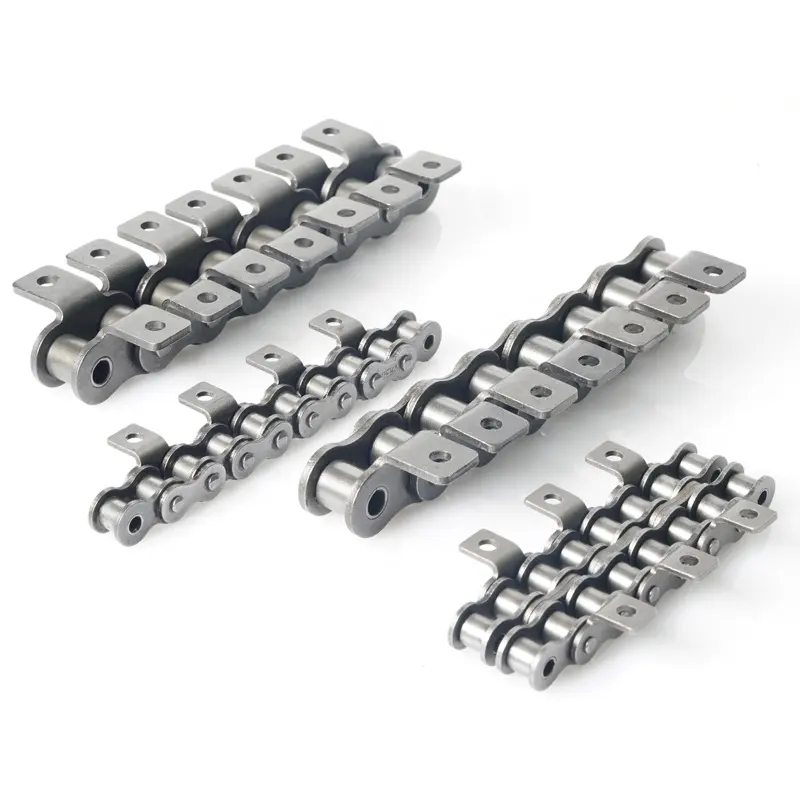
What are the benefits of using a corrosion-resistant transmission chain?
Using a corrosion-resistant transmission chain offers several advantages in terms of performance, durability, and cost-effectiveness. Here’s a detailed answer to the question:
1. Extended Lifespan: Corrosion-resistant transmission chains are specifically designed to withstand harsh environments and resist the effects of corrosion. They are made from materials such as stainless steel, nickel-plated steel, or coatings like zinc or chrome, which provide excellent protection against corrosion. By using a corrosion-resistant chain, you can significantly extend the lifespan of the chain and reduce the need for frequent replacements.
2. Reliable Performance: Corrosion can negatively impact the performance of transmission chains by causing wear, friction, and binding. Corrosion-resistant chains maintain their smooth operation and consistent performance over time, ensuring reliable power transmission and reducing the risk of chain failure or downtime.
3. Reduced Maintenance: Corrosion-resistant chains require less maintenance compared to standard chains. They are less prone to rust and degradation, resulting in lower maintenance costs and time spent on chain lubrication, cleaning, and replacement. This is particularly beneficial in industries where maintenance accessibility is challenging or costly.
4. Cost Savings: although corrosion-resistant chains may have a higher upfront cost compared to standard chains, they offer long-term cost savings. The extended lifespan and reduced maintenance requirements result in lower overall operating costs and improved equipment reliability. Additionally, avoiding premature chain failure due to corrosion can prevent costly equipment damage and production downtime.
5. Versatility: Corrosion-resistant transmission chains are suitable for a wide range of applications and environments. They can be used in industries such as food processing, marine, chemical, pharmaceutical, or outdoor equipment, where exposure to moisture, chemicals, s altwater, or other corrosive substances is common. The versatility of corrosion-resistant chains allows them to be deployed in diverse operating conditions without compromising performance or durability.
6. Compliance with Regulations: In certain industries, such as food processing or pharmaceuticals, strict regulations and hygiene standards are in place. Using corrosion-resistant chains helps meet these regulatory requirements, ensuring product integrity, safety, and compliance with industry standards.
By choosing a corrosion-resistant transmission chain, you can benefit from its extended lifespan, reliable performance, reduced maintenance, cost savings, versatility, and compliance with regulations. It is important to consider the specific application requirements and environmental conditions when selecting the appropriate corrosion-resistant chain for optimal performance and longevity.
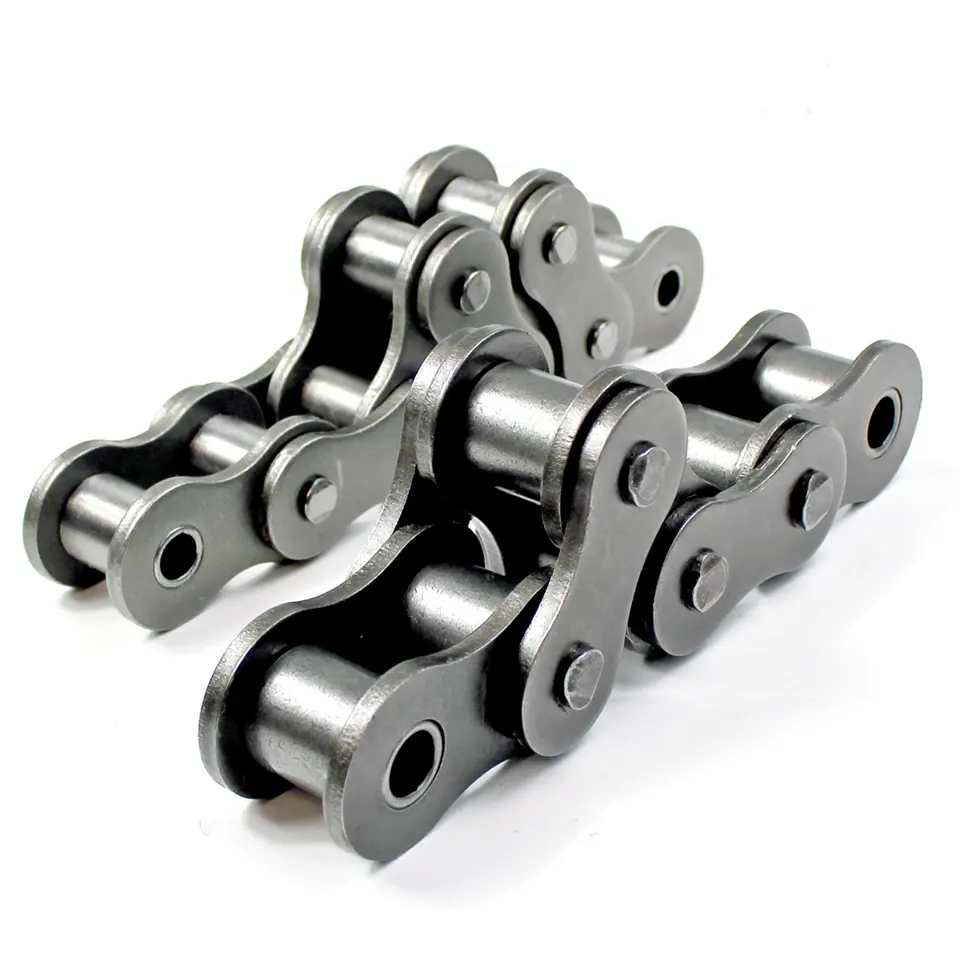
What are the advantages of using a lubrication-free transmission chain?
Using a lubrication-free transmission chain offers several benefits. Here’s a detailed answer to the question:
1. Maintenance-free Operation: Lubrication-free transmission chains eliminate the need for regular lubrication and maintenance. This saves time, reduces maintenance costs, and minimizes downtime associated with lubrication tasks.
2. Clean and Environmentally Friendly: Lubrication-free chains operate without the need for external lubricants, which eliminates the risk of oil or grease contamination in the surrounding environment. This is particularly advantageous in applications where cleanliness is crucial, such as in food processing, pharmaceutical, or cleanroom environments.
3. Reduced Friction and Wear: Lubrication-free chains are designed with self-lubricating materials or coatings that offer low friction and excellent wear resistance. These chains are specifically engineered to provide long-lasting performance without the need for external lubrication. The reduced friction and wear contribute to extended chain life and improved efficiency.
4. Enhanced Reliability: Lubrication-free transmission chains provide consistent and reliable performance, as they are not dependent on external lubrication that can deteriorate or deplete over time. They are designed to withstand various operating conditions and maintain their performance even in the absence of lubrication.
5. Wide Range of Applications: Lubrication-free transmission chains are suitable for a wide range of applications across different industries. They are commonly used in industries such as food and beverage, packaging, medical equipment, textile, and electronics, where lubrication may not be feasible or desirable.
6. Improved Cleanliness and Safety: Lubrication-free chains contribute to a cleaner working environment by eliminating the risk of oil or grease leaks. This enhances workplace safety, reduces the potential for slip hazards, and ensures compliance with stringent cleanliness standards.
It’s important to note that lubrication-free chains are designed and manufactured using specialized materials and coatings to provide the necessary self-lubricating properties. It’s essential to choose the appropriate lubrication-free chain based on the specific application requirements and operating conditions.
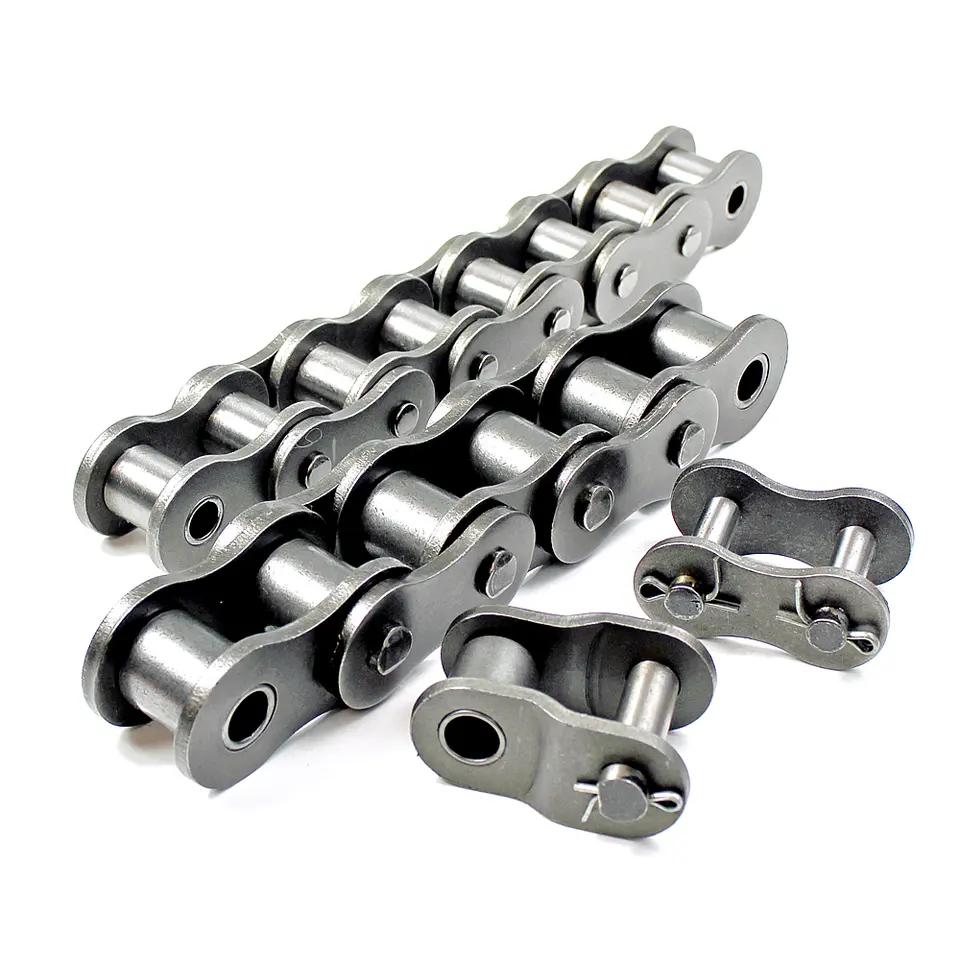
How does the load capacity of a transmission chain affect its performance?
The load capacity of a transmission chain plays a crucial role in determining its performance and reliability in various applications. Here’s a detailed explanation:
The load capacity refers to the maximum amount of force or weight that a transmission chain can withstand without experiencing premature wear, deformation, or failure. It is typically specified by the manufacturer and depends on several factors, including the chain’s design, material, construction, and operating conditions.
When the load on a transmission chain exceeds its capacity, several performance issues may arise:
- Increased Wear: Excessive loads can cause accelerated wear on the chain’s components, such as the pins, bushings, and rollers. This can lead to elongation, increased friction, and potential chain failure.
- Reduced Efficiency: Overloading the chain can result in higher frictional losses, reducing the efficiency of power transmission. This can lead to energy wastage and decreased overall system performance.
- Potential Chain Breakage: If the load exceeds the chain’s capacity by a significant margin, it can cause the chain to break, resulting in machine downtime and potential safety hazards.
- Increased Stress on Other Components: An overloaded transmission chain puts additional stress on other connected components, such as sprockets, bearings, and shafts. This can lead to premature wear and failure of these components as well.
Choosing a transmission chain with an appropriate load capacity is crucial for ensuring optimal performance and longevity. It is important to consider factors such as the expected load magnitude, variations in load during operation, and safety factors to select a chain that can safely and reliably handle the intended application.
Manufacturers provide load capacity charts and guidelines based on extensive testing and engineering analysis. It is advisable to consult these resources and work closely with the manufacturer or a qualified engineer to determine the most suitable transmission chain for your specific load requirements.


editor by CX 2023-10-16