
Product Description
CHINAMFG rollers enhance rotation on the bushing while reducing impact loads on the sprocket tooth during operation.
All components are heat treated to achieve maximum strength. All components are heat treated to achieve maximum strength.
Pre-loaded during the manufacturing process to minimize initial elongation.
Hot dipped lubrication ensures 100% lubrication of all chain components to extend wear life and reduce maintenance costs.
| ISO NO. |
ANSI NO. |
PITCH | BUSH WIDTH |
ROLLER DIA |
PIN | PLATE | TRANS PITCH |
MIN. STRENGTH |
AVG. STRENGTH |
WEIGHT | |||
| d | L1 | L2 | H | t/T | |||||||||
| mm | mm | mm | mm | mm | mm | mm | mm | mm | kgf | kgf | kg/m | ||
| *04C-2 | *25-2 | 6.350 | 3.18 | 3.30 | 2.31 | 7.10 | 7.90 | 5.90 | 0.75 | 6.40 | 7.00 | 8.60 | 0.28 |
| *06C-2 | *36-2 | 9.525 | 4.77 | 5.08 | 3.58 | 11.10 | 12.30 | 9.00 | 1.27 | 10.13 | 15.80 | 20.00 | 0.69 |
| 08A-2 | 40-2 | 12.700 | 7.85 | 7.77 | 3.96 | 15.50 | 16.70 | 12.00 | 1.52 | 14.38 | 27.60 | 34.50 | 1.30 |
| 571A-2 | 50-2 | 15.875 | 9.40 | 10.16 | 5.08 | 19.30 | 20.70 | 15.00 | 2.00 | 18.11 | 43.60 | 59.50 | 2.08 |
| 012A-2 | 60-2 | 19.050 | 12.57 | 11.91 | 5.94 | 24.05 | 25.95 | 18.00 | 2.40 | 22.78 | 62.30 | 80.60 | 3.09 |
| 016A-2 | 80-2 | 25.400 | 15.75 | 15.88 | 7.92 | 30.75 | 33.15 | 23.50 | 3.20 | 29.29 | 111.20 | 134.80 | 5.29 |
| 571A-2 | 100-2 | 31.750 | 18.90 | 19.05 | 9.52 | 37.70 | 41.10 | 30.00 | 4.00 | 35.76 | 173.50 | 224.30 | 8.01 |
| 571A-2 | 120-2 | 38.100 | 25.22 | 22.23 | 11.10 | 47.75 | 51.05 | 35.80 | 4.90 | 45.44 | 249.10 | 326.40 | 11.84 |
| 571A-2 | 140-2 | 44.450 | 25.22 | 25.40 | 12.70 | 51.35 | 55.35 | 41.50 | 5.60 | 48.87 | 338.10 | 409.00 | 14.89 |
| 032A-2 | 160-2 | 50.800 | 31.55 | 28.58 | 14.27 | 61.35 | 65.05 | 48.00 | 6.40 | 58.55 | 444.80 | 556.80 | 20.26 |
| 036A-2 | 180-2 | 57.150 | 35.48 | 35.71 | 17.46 | 69.25 | 73.65 | 54.00 | 7.20 | 65.84 | 560.50 | 652.80 | 27.62 |
| 040A-2 | 200-2 | 63.500 | 37.85 | 39.68 | 19.84 | 75.35 | 79.65 | 59.60 | 8.00 | 71.55 | 693.90 | 921.60 | 33.64 |
| Usage: | Transmission Chain, Conveyor Chain, Roller Chain |
|---|---|
| Material: | Alloy/Carbon Steel |
| Surface Treatment: | Polishing |
| Feature: | Heat Resistant |
| Chain Size: | 1/4"~3" |
| Structure: | Roller Chain |
| Samples: |
US$ 10/Meter
1 Meter(Min.Order) | |
|---|
| Customization: |
Available
| Customized Request |
|---|
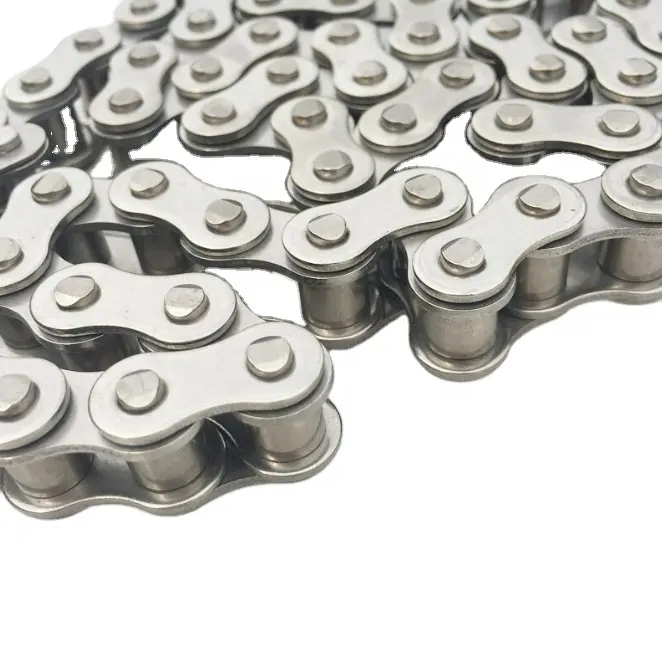
How does the choice of chain tensioner affect the performance of a transmission chain?
The choice of chain tensioner plays a critical role in ensuring the optimal performance of a transmission chain. Here’s a detailed answer to the question:
1. Proper Chain Engagement: The chain tensioner helps maintain the correct tension in the transmission chain, ensuring proper engagement between the chain and the sprockets. This is essential for effective power transmission and smooth operation.
2. Chain Slack Control: A properly selected chain tensioner helps control chain slack, which is the amount of looseness in the chain. Excessive chain slack can lead to chain jumping, misalignment, and increased wear, while insufficient slack can cause excessive tension, leading to accelerated chain and sprocket wear.
3. Noise and Vibration Reduction: The use of an appropriate chain tensioner helps minimize noise and vibration in the transmission system. It helps dampen the impact forces and vibrations caused by the chain’s motion, resulting in quieter operation and improved overall system performance.
4. Extended Chain Life: By maintaining the proper tension, the chain tensioner helps prevent premature wear and elongation of the transmission chain. This contributes to the chain’s longevity, reducing the frequency of chain replacements and lowering maintenance costs.
5. Compensation for Wear and Stretch: As a transmission chain wears over time, it may experience elongation or stretch. The chain tensioner compensates for this elongation by adjusting the tension, ensuring the chain remains properly tensioned and engaged with the sprockets. This helps maintain consistent performance and prevents skipping or disengagement.
6. Adaptability to Variable Conditions: Some chain tensioners offer the ability to adjust the tension dynamically, accommodating variations in operating conditions such as temperature fluctuations or load changes. This flexibility ensures optimal chain performance and compensates for the effects of thermal expansion or contraction.
It’s crucial to select a chain tensioner that is compatible with the specific transmission chain and application requirements. Consider factors such as chain size, tension adjustment range, environmental conditions, and load variations when choosing a chain tensioner. Regular inspection and maintenance of the tensioner are also essential to ensure its proper functioning and prolong the life of the transmission chain.
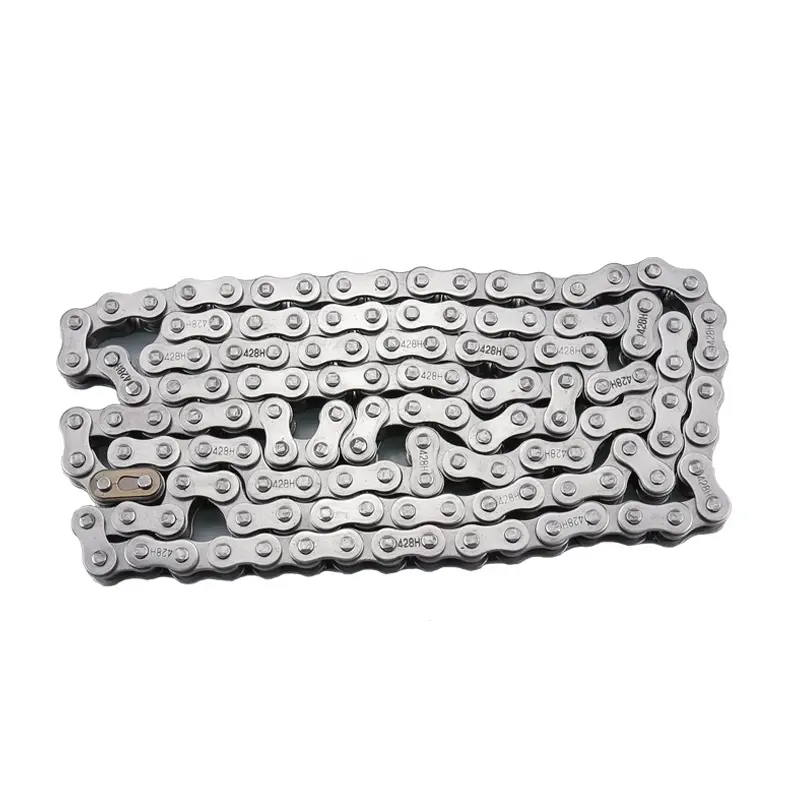
How does the alignment of sprockets affect the lifespan of a transmission chain?
The alignment of sprockets plays a crucial role in the lifespan and performance of a transmission chain. Here’s a detailed answer to the question:
1. Proper Load Distribution: When the sprockets are aligned correctly, the transmission chain is able to evenly distribute the load along its length. This ensures that the chain experiences uniform stress and minimizes the concentration of forces on specific chain links. Improper alignment can result in uneven load distribution, leading to accelerated wear and fatigue of the chain.
2. Reduced Friction and Wear: Proper alignment helps maintain the correct engagement between the chain and the sprockets. When the chain engages smoothly with the sprockets, friction and wear are minimized. On the other hand, misaligned sprockets can cause the chain to rub against the teeth or sides of the sprockets, leading to increased friction, wear, and potential chain failure.
3. Chain Tension: Sprocket alignment also affects the tension of the transmission chain. Proper alignment ensures that the chain remains properly tensioned throughout its operation. Excessive tension due to misalignment can lead to increased stress on the chain, resulting in accelerated wear, fatigue, and potential chain breakage. Insufficient tension can cause the chain to skip or disengage from the sprockets.
4. Smooth and Efficient Operation: When the sprockets are aligned correctly, the transmission chain experiences smooth and efficient operation. This allows for smooth power transfer, reduced vibration, and noise levels, and improved overall system performance. Misaligned sprockets can cause the chain to bind, jump, or produce excessive noise, leading to decreased efficiency and potential damage to the chain and sprockets.
5. Extended Chain Life: Proper sprocket alignment helps to extend the lifespan of the transmission chain. By ensuring that the chain operates within its design parameters and experiences minimal stress and wear, the risk of premature failure is reduced. This leads to longer chain life, reduced maintenance requirements, and lower overall operating costs.
It’s important to regularly inspect and maintain the alignment of sprockets in a transmission chain system. Proper installation, periodic alignment checks, and adjustment when necessary are essential for maximizing the lifespan and performance of the transmission chain.

Can transmission chains be used in corrosive environments?
Transmission chains can be used in corrosive environments, but the choice of materials and proper maintenance are crucial to ensure their performance and longevity. Here’s a detailed explanation:
1. Material Selection: When operating in corrosive environments, it is important to select transmission chains made from corrosion-resistant materials. Stainless steel chains are commonly used due to their excellent resistance to rust and corrosion. They are capable of withstanding exposure to moisture, chemicals, and other corrosive agents.
2. Coatings and Treatments: Applying specialized coatings or treatments to the transmission chains can provide an extra layer of protection against corrosion. These coatings, such as zinc plating or epoxy coatings, create a barrier between the chain and the corrosive environment, reducing the risk of degradation.
3. Sealed or Enclosed Design: In some cases, using transmission chains with sealed or enclosed designs can help prevent contaminants, including corrosive substances, from entering the chain assembly. This can prolong the chain’s life and maintain its performance in corrosive environments.
4. Proper Lubrication: Adequate lubrication is crucial for maintaining the performance and preventing corrosion in transmission chains. Lubricants with anti-corrosive properties should be used to provide a protective film on the chain’s surfaces, reducing friction and preventing the corrosive agents from reaching the chain’s metal components.
5. Regular Inspection and Cleaning: Regular inspection and cleaning of the transmission chains are necessary in corrosive environments. This helps detect any signs of corrosion or damage early on, allowing for timely maintenance or replacement. Cleaning the chains with appropriate cleaning agents can help remove any corrosive residues and prolong their lifespan.
It is important to consult with the chain manufacturer or a knowledgeable expert to determine the most suitable chain and maintenance practices for specific corrosive environments. By selecting the right materials, applying protective coatings, ensuring proper lubrication, and conducting regular maintenance, transmission chains can be effectively used in corrosive environments while maintaining their performance and durability.


editor by CX 2023-11-06