
Product Description
Simplex stainless 304 Roller Chain (08B-1, 24B-1)
The most commonly used chain is roller chain or as it is also known transmission chain. These are the simplest chain drives, Used mainly for transmitting power. Can be supplied from 3mm pitch up to 4″ pitch in either mild steel or stainless steel.
| DIN/ISO Chain No. |
Pitch | Roller Diameter |
Width Between Inner Plates |
Pin Diameter |
Pin Length |
Inner Plate depth |
Plate thick ness |
Ultimate Tensile Strength |
Average Tensile Strength |
Weight Per Meter |
|
| Mm | mm | mm | mm | mm | mm | mm | mm | kN/LB | kN | Kg/m | |
| 04B-1 | 6.000 | 4.00 | 2.80 | 1.85 | 6.80 | 7.80 | 5.00 | 0.60 | 3.0/682 | 3.2 | 0.11 |
| 05B-1 | 8.000 | 5.00 | 3.00 | 2.31 | 8.20 | 8.90 | 7.10 | 0.80 | 5.0/1136 | 5.9 | 0.20 |
| *06B-1 | 9.525 | 6.35 | 5.72 | 3.28 | 13.15 | 14.10 | 8.20 | 1.30 | 9.0/2045 | 10.4 | 0.41 |
| 08B-1 | 12.700 | 8.51 | 7.75 | 4.45 | 16.70 | 18.20 | 11.80 | 1.60 | 18.0/4091 | 19.40 | 0.69 |
| 10B-1 | 15.875 | 10.16 | 9.65 | 5.09 | 19.50 | 20.90 | 14.70 | 1.70 | 22.4/5091 | 27.50 | 0.93 |
| 12B-1 | 19.050 | 12.07 | 11.68 | 5.72 | 22.50 | 24.2 | 16.00 | 1.85 | 29.0/6591 | 32.20 | 1.15 |
| 16B-1 | 25.400 | 15.88 | 17.02 | 8.28 | 36.10 | 37.4 | 21.00 | 4.15/3.1 | 60.0/13636 | 72.80 | 2.71 |
| 20B-1 | 31.750 | 19.05 | 19.56 | 10.19 | 41.30 | 45.0 | 26.40 | 4.5/3.5 | 95.0/21591 | 106.7 | 3.70 |
| 24B-1 | 38.100 | 25.40 | 25.40 | 14.63 | 53.40 | 57.80 | 33.20 | 6.0/4.8 | 160.0/36364 | 178.0 | 7.10 |
| 28B-1 | 44.450 | 27.94 | 30.99 | 15.90 | 65.10 | 69.50 | 36.70 | 7.5/6.0 | 200.0/45455 | 222.0 | 8.50 |
| 32B-1 | 50.800 | 29.21 | 30.99 | 17.81 | 66.00 | 71.0 | 42.00 | 7.0/6.0 | 250.0/56818 | 277.5 | 10.25 |
| 40B-1 | 63.50 | 39.37 | 38.10 | 22.89 | 82.20 | 89.2 | 52.96 | 8.5/8.0 | 355.0/80682 | 394.0 | 16.35 |
| 48B-1 | 76.20 | 48.26 | 45.72 | 29.24 | 99.10 | 107.0 | 63.80 | 12.0/10.0 | 560.0/127272 | 621.6 | 25.00 |
| 56B-1 | 88.90 | 53.98 | 53.34 | 34.32 | 114.60 | 123.0 | 77.80 | 13.5/12.0 | 850.0/193180 | 940.0 | 35.78 |
| *Bushing chain: d1 in the table indicate the external diameter of bushing |
|||||||||||
We own the sophisticated equipment and the advanced technology, such as:
1. CAD Designer
2. Wire Cutting Machine
3. Chain Running In Machine
4. Conveyor Furance
5. Ball Drift
6. Shot Peened Parts
7. Design Of Link Plate Waist
Company Detail:
GOODLUCK TRANSMISSION is 1 of a professional exporter with exporting POWER TRANSMISSION PARTS: Roller chains,conveyor chain,stainless steel chains, agricultural chains, steel detachable chains, special chains, sprockets, s. S. Sprockets, HRC couplings, pulleys, bushes etc. All these products have been supplied regularly to World Wide for over 15 years.
Welcome contact for more detail.
| Usage: | Transmission Chain |
|---|---|
| Material: | Stainless steel |
| Surface Treatment: | Polishing |
| Samples: |
US$ 100/Piece
1 Piece(Min.Order) | Order Sample Pls contact with Sellers
|
|---|
| Customization: |
Available
| Customized Request |
|---|
.shipping-cost-tm .tm-status-off{background: none;padding:0;color: #1470cc}
|
Shipping Cost:
Estimated freight per unit. |
about shipping cost and estimated delivery time. |
|---|
| Payment Method: |
|
|---|---|
|
Initial Payment Full Payment |
| Currency: | US$ |
|---|
| Return&refunds: | You can apply for a refund up to 30 days after receipt of the products. |
|---|
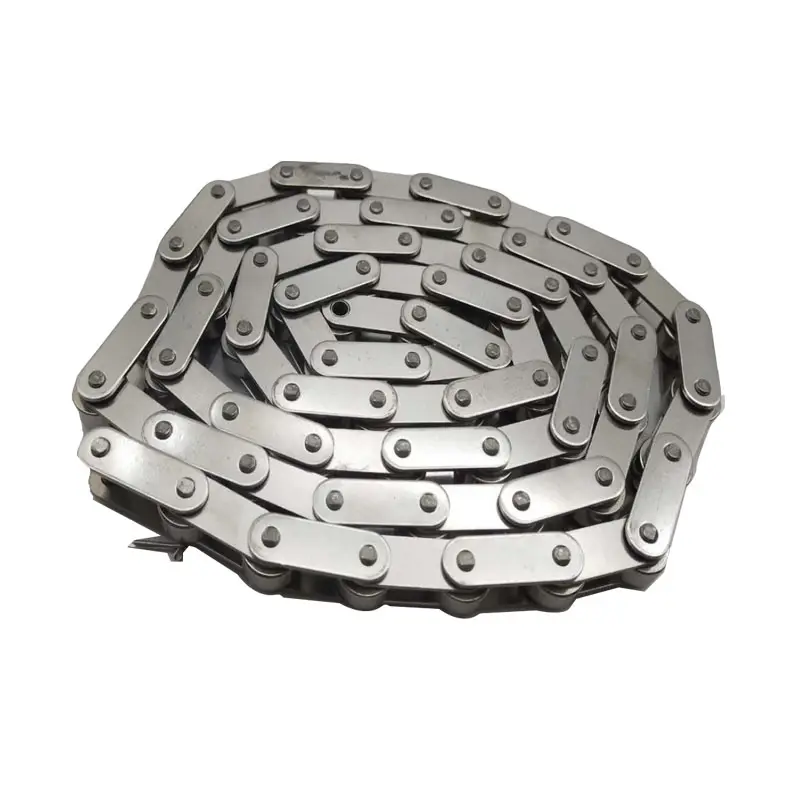
Can transmission chains be used in material handling systems?
Yes, transmission chains can be used in material handling systems. Here’s a detailed answer to the question:
Material handling systems involve the movement, storage, control, and protection of materials and products within a manufacturing or distribution facility. These systems often require reliable and efficient power transmission to move conveyors, lifters, hoists, and other equipment used in material handling operations.
Transmission chains offer several advantages for material handling applications:
1. High Load Capacity: Transmission chains are designed to handle heavy loads and provide robust power transmission capabilities. They are capable of transmitting high torque, making them suitable for lifting and moving heavy objects in material handling systems.
2. Durability: Transmission chains are constructed with high-quality materials and undergo stringent manufacturing processes to ensure durability and longevity. They are designed to withstand the demanding operating conditions typically encountered in material handling systems, including continuous operation and exposure to various loads and environments.
3. Versatility: Transmission chains are available in various sizes, configurations, and materials to accommodate different material handling applications. They can be customized to meet specific requirements such as load capacity, speed, and environmental conditions.
4. Precision and Efficiency: Transmission chains offer precise and efficient power transmission, allowing for smooth and reliable movement of materials. They have minimal backlash and provide accurate positioning, ensuring the precise handling of materials within the system.
5. Adaptability: Transmission chains can be easily integrated into different types of material handling equipment and systems. They can be used in conveyor systems, overhead cranes, stackers, palletizers, and many other applications commonly found in material handling operations.
6. Maintenance and Serviceability: Transmission chains are designed for easy maintenance and replacement. Regular lubrication and inspection can help ensure optimal performance and extend the chain’s lifespan. When necessary, worn or damaged components can be replaced, minimizing downtime and maintenance costs.
It’s important to select the appropriate type and size of transmission chain based on the specific requirements of the material handling system. Factors to consider include the load capacity, operating speed, environmental conditions, and maintenance considerations. Consulting with experts or manufacturers can help determine the most suitable transmission chain for reliable and efficient material handling operations.
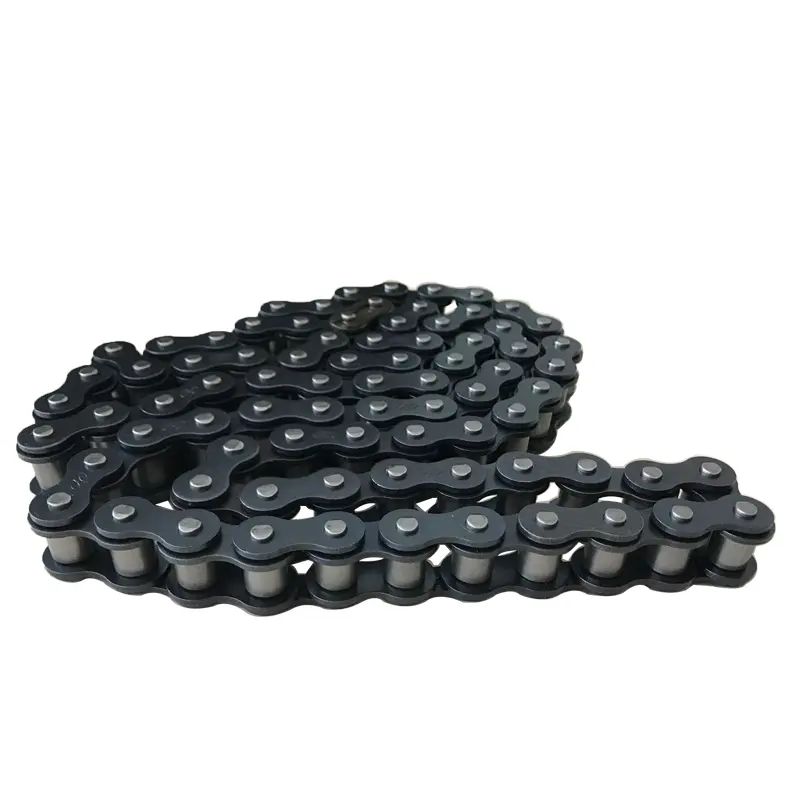
How does the speed of rotation affect the choice of transmission chain?
The speed of rotation is an important factor to consider when selecting a transmission chain for a specific application. Here’s a detailed answer to the question:
1. Fatigue and Wear: The speed of rotation directly affects the fatigue and wear characteristics of a transmission chain. Higher rotational speeds result in increased cyclic loading and wear on the chain’s components. Therefore, it is crucial to choose a chain that is designed to handle the anticipated speed and associated fatigue stresses.
2. Lubrication and Cooling: Faster rotational speeds generate more heat due to friction between the chain and the sprockets. Adequate lubrication is essential to minimize friction, reduce heat buildup, and maintain the chain’s performance and longevity. Additionally, some high-speed applications may require additional cooling mechanisms to dissipate heat effectively.
3. Centrifugal Forces: As the rotational speed increases, centrifugal forces become more significant. These forces can affect the chain’s stability, tension, and overall performance. Chains designed for high-speed applications are engineered to withstand the increased centrifugal forces and maintain proper tension during operation.
4. Dynamic Balance: High-speed rotation may introduce dynamic imbalances in the transmission system, leading to vibrations and decreased system efficiency. Special attention should be given to selecting a transmission chain with proper dynamic balance characteristics to minimize vibrations and ensure smooth operation.
5. Material and Design: Chains for high-speed applications often require specific materials and design features to accommodate the increased rotational forces and maintain reliability. High-strength alloys, precise manufacturing tolerances, and advanced surface treatments may be employed to enhance the chain’s performance and durability at high speeds.
When selecting a transmission chain, it is crucial to consider the manufacturer’s recommendations and specifications regarding maximum allowable speeds. Factors such as the application’s operational requirements, anticipated rotational speed, load, and environmental conditions should all be taken into account to ensure the chosen chain is suitable for the specific high-speed application.
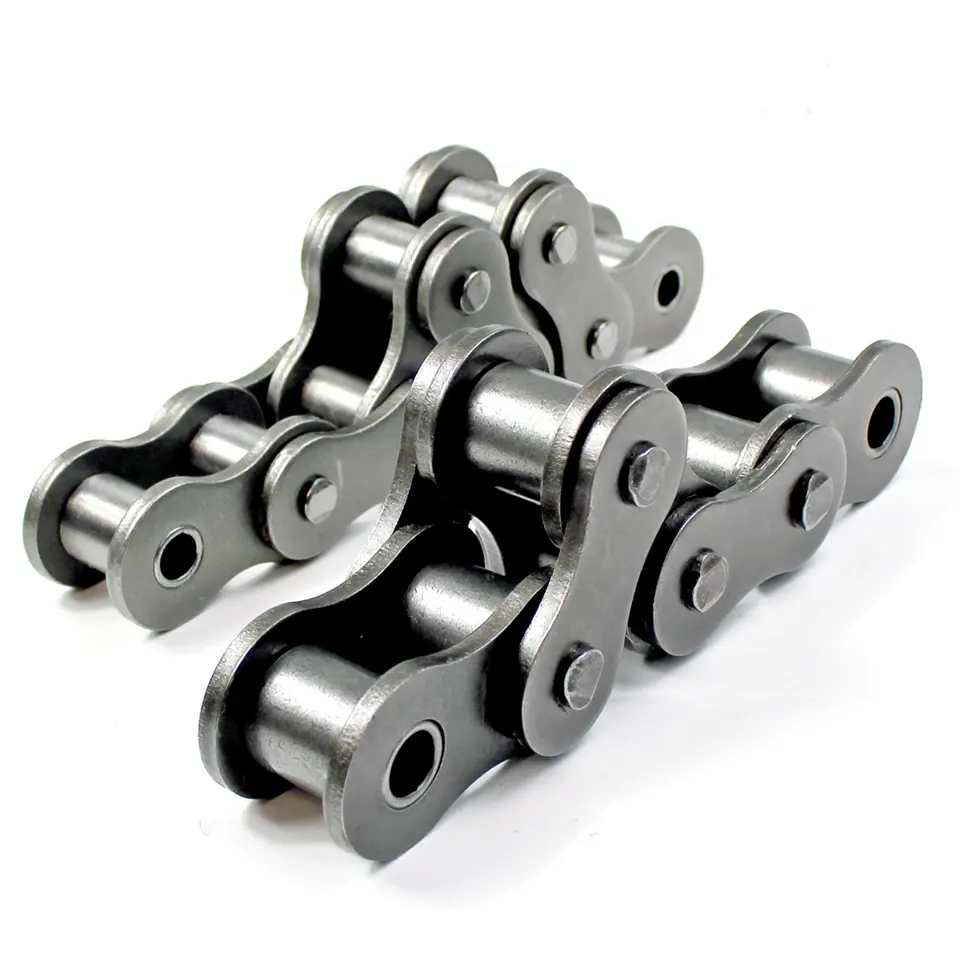
What are the benefits of using a self-lubricating transmission chain?
A self-lubricating transmission chain, also known as a maintenance-free chain, offers several advantages in various applications. Here are the key benefits:
- Reduced Maintenance: Self-lubricating chains eliminate the need for regular manual lubrication, reducing maintenance time and costs. They are designed with built-in lubrication systems that continuously release lubricant as needed, ensuring optimal chain performance.
- Extended Chain Life: The consistent and controlled lubrication provided by self-lubricating chains helps reduce friction, wear, and corrosion, thereby extending the chain’s operational life. This results in improved reliability and reduced downtime.
- Enhanced Efficiency: Self-lubricating chains maintain their lubrication over an extended period, promoting smooth and efficient power transmission. This helps to minimize power losses and maximize the overall efficiency of the system.
- Cleaner Environment: Since self-lubricating chains release lubricant only when necessary, there is less chance of excess lubrication accumulating and contaminating the surrounding environment. This makes them suitable for applications where cleanliness is crucial, such as food processing, pharmaceuticals, and cleanroom environments.
- Consistent Performance: The self-lubricating feature ensures a constant and reliable supply of lubrication to critical areas of the chain, even in challenging operating conditions. This helps to maintain consistent performance and reduce the risk of premature chain failure.
- Application Versatility: Self-lubricating chains are available in various sizes and configurations, making them suitable for a wide range of applications. They can be used in industries such as automotive, packaging, material handling, and automation.
By choosing a self-lubricating transmission chain, you can enjoy the benefits of reduced maintenance, extended chain life, improved efficiency, a cleaner environment, consistent performance, and versatility in application.


editor by CX 2023-12-06