
Product Description
Harvester Chains of Carton Steel (415S)
PRODUCT SHOW
PRODUCT DETAILS
Product Parameters
| Standard | GB, ISO, ANSI, DIN |
| Type | Standard A and standard B precision roller chain, conveyor chain; |
| special chain with accessories, welding chain, leaf chain and sprocket | |
| ANSI chain No. | 40,50,60,80,100,120,140,160,180,200,240; |
| C40,C50,C60,C80,C100,C120,C140,C160; | |
| DIN/ISO chain No. | 08A,10A,12A,16A,20A,24A,28A,32A,36A,40A,48A; |
| C08A,C10A,C12A,C16A,C20A,C24A,C28A,C32A; | |
| Application | Food processing, pharmaceutical and chemical industries, electronics, machinery; |
| household appliances, automotive manufacturing, metallurgy, sewage treatment | |
| Series | A series, B series |
More Products
Advantage
Certifications
DETAILS ABOUT CHINAMFG CHAIN
Exhibition
Workshop
Application
Packaging Details
Shipping
FAQ
1. Are you a manufacturer or trade Company?
We are a factory founded in 1997 with a trade team for international service.
2. What terms of payment do you usually use?
T/T 30% deposit and 70% against document, Western Union, L/C at sight
3. What is your lead time for your goods?
Normally 35 days after confirmed order. 30 days could be available in the low season for some items (during May to July), and 45 days during the new year and hot season ( Jan to March).
4. Samples
For customers who need sample confirmation before ordering, please bear in mind that the following policy will be adopted:
1) All samples are free of charge with a maximum value not exceeding USD 100.
2) The courier cost for the first-time sample sending will be charged by the consignee. We will send the samples with freight to be collected. So please inform your account with FedEx, UPS, DHL, or TNT so that we can proceed promptly.
3) The first-time courier cost will be totally deducted from the contract value of the trial cooperation.
| Usage: | Transmission Chain, Conveyor Chain, Agricultural Machine |
|---|---|
| Material: | Alloy/Carbon Steel |
| Surface Treatment: | Polishing |
| Feature: | Heat Resistant |
| Chain Size: | All Sizes |
| Structure: | Agricultural Machine |
| Customization: |
Available
| Customized Request |
|---|
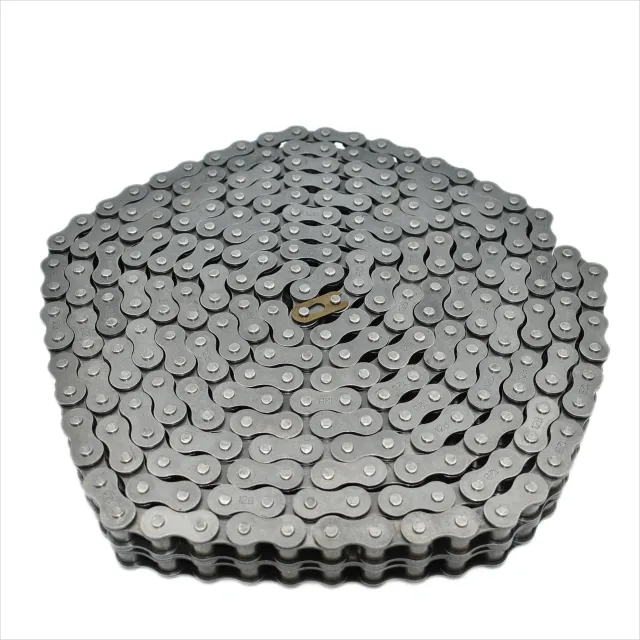
How does the choice of chain coating impact the performance of a transmission chain?
The choice of chain coating can significantly influence the performance and durability of a transmission chain. Here’s a detailed answer to the question:
1. Corrosion Resistance: Chain coatings, such as zinc plating or polymer coatings, provide a protective layer that prevents the transmission chain from corroding when exposed to moisture, chemicals, or harsh environments. Corrosion can weaken the chain, leading to premature failure and reduced performance. A proper chain coating can extend the chain’s lifespan and maintain its functionality.
2. Wear Resistance: Some chain coatings, such as those with specialized polymers or ceramic particles, offer enhanced wear resistance. These coatings reduce the friction and abrasion between the chain and the sprockets, minimizing wear on the chain’s pins, bushings, and rollers. By reducing wear, the chain’s performance and longevity are improved, resulting in less frequent replacements and lower maintenance costs.
3. Reduced Friction and Energy Loss: Certain chain coatings are designed to reduce friction between the chain and the sprockets, resulting in smoother operation and improved energy efficiency. The reduced friction leads to lower energy loss during power transmission, which is especially beneficial in applications where energy savings are a priority.
4. Noise Reduction: Some chain coatings incorporate noise-dampening properties, which can help reduce the noise generated during chain operation. This is particularly advantageous in applications where noise reduction is essential, such as in residential or office settings, or in machinery that requires quiet operation.
5. Compatibility with Lubricants: The choice of chain coating should be compatible with the lubricants used in the application. Certain coatings have self-lubricating properties, allowing for reduced reliance on external lubrication. In contrast, other coatings may require specific lubricants to ensure optimal performance and longevity of the chain.
6. Environmental Considerations: Depending on the application, there may be specific environmental regulations or requirements to consider. Chain coatings that are environmentally friendly, such as those free of harmful substances or compliant with specific industry standards, can help meet these requirements and ensure sustainable operation.
It’s important to select the appropriate chain coating based on the specific application’s demands, including environmental conditions, load capacity, operating speed, and lubrication requirements. Consulting with experts or manufacturers can help determine the most suitable chain coating for optimal performance, durability, and longevity of the transmission chain.
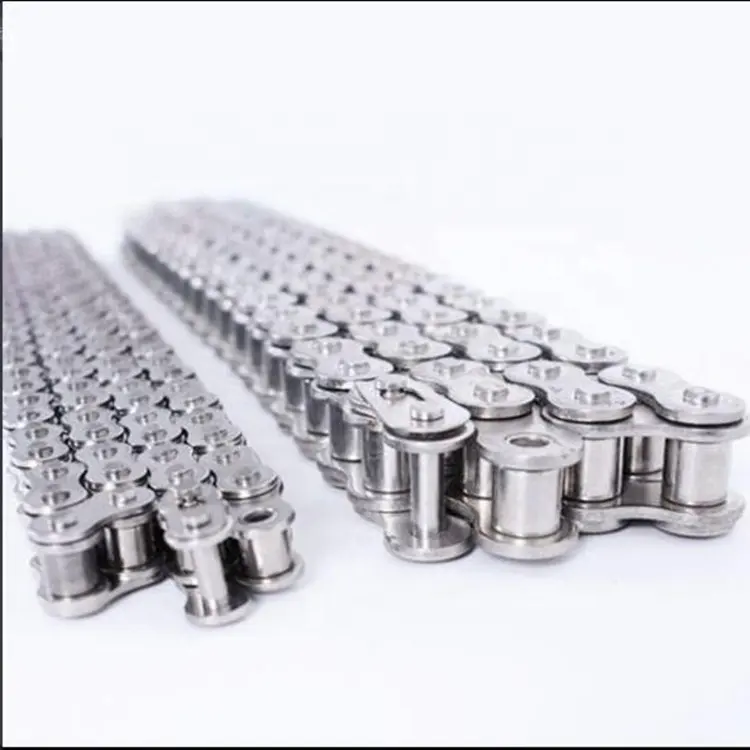
Can transmission chains be used in mining or heavy-duty industrial applications?
Transmission chains are commonly used in mining and heavy-duty industrial applications due to their durability and strength. Here’s a detailed answer to the question:
1. Robust Construction: Transmission chains designed for mining and heavy-duty industrial applications are built to withstand extreme conditions and heavy loads. They are constructed using high-quality materials and undergo rigorous testing to ensure they can handle the demanding environments and intense operating conditions.
2. High Load Capacity: Mining and heavy-duty industrial applications often involve transporting heavy loads or operating equipment under significant stress. Transmission chains used in these applications are engineered to have high load capacity, allowing them to reliably transmit power and handle the substantial forces encountered in such operations.
3. Resistance to Wear and Abrasion: Mining and heavy-duty industrial environments can be abrasive and cause rapid wear on components. Transmission chains used in these applications are designed with excellent wear resistance to withstand the abrasive nature of the materials being handled. They are often treated with specialized coatings or surface treatments to enhance their resistance to wear and extend their lifespan.
4. Corrosion Resistance: Mining operations and heavy-duty industrial settings may expose transmission chains to corrosive substances or environments. To combat corrosion, transmission chains used in these applications are often made from materials such as stainless steel or treated with anti-corrosion coatings. This ensures the chains can maintain their integrity and performance over time, even in harsh conditions.
5. Reliability and Durability: Mining and heavy-duty industrial applications require reliable and durable equipment to minimize downtime and maximize productivity. Transmission chains are known for their reliability and ability to operate in challenging conditions, making them well-suited for these demanding applications. Proper maintenance and regular inspections are necessary to ensure optimal performance and maximize the lifespan of the chains.
When selecting transmission chains for mining or heavy-duty industrial applications, it’s essential to consider factors such as load capacity, speed, environmental conditions, and compatibility with other equipment. Consulting with experts or manufacturers specializing in chains for these specific applications can help ensure the best chain selection for optimal performance and longevity.
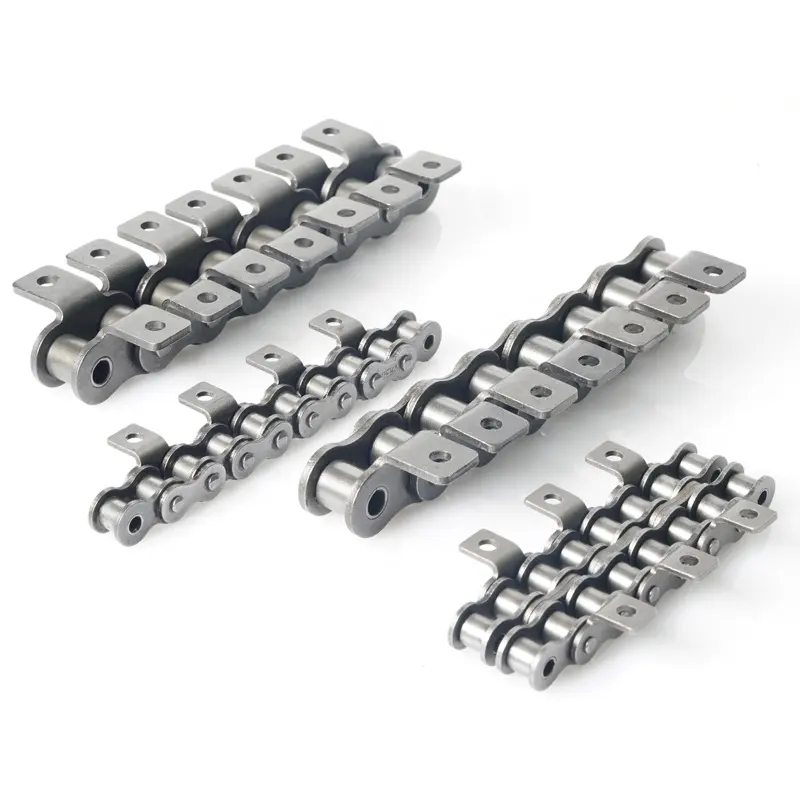
What are the main differences between standard and heavy-duty transmission chains?
Standard and heavy-duty transmission chains are designed to meet different load and performance requirements. Here are the main differences between these two types:
- Load Capacity: Heavy-duty transmission chains are built to handle higher loads and provide greater strength compared to standard chains. They are designed to withstand heavier and more demanding applications.
- Construction: Heavy-duty transmission chains are typically constructed with thicker plates, larger pins, and stronger components to enhance their durability and load-carrying capacity.
- Size: Heavy-duty transmission chains are often larger in size compared to standard chains to accommodate the increased load requirements.
- Weight: Due to their robust construction, heavy-duty transmission chains tend to be heavier than standard chains.
- Durability: Heavy-duty chains are engineered to have greater wear resistance, fatigue resistance, and overall durability to withstand harsh operating conditions and prolonged usage.
- Applications: Standard transmission chains are suitable for lighter-duty applications where moderate loads are involved, such as light machinery, conveyors, and small equipment. Heavy-duty transmission chains, on the other hand, are designed for heavy machinery, industrial equipment, mining applications, and other demanding environments.
It’s important to consider the specific requirements of your application, including load capacity, operating conditions, and expected lifespan, to determine whether a standard or heavy-duty transmission chain is the right choice.


editor by CX 2023-11-30