
Product Description
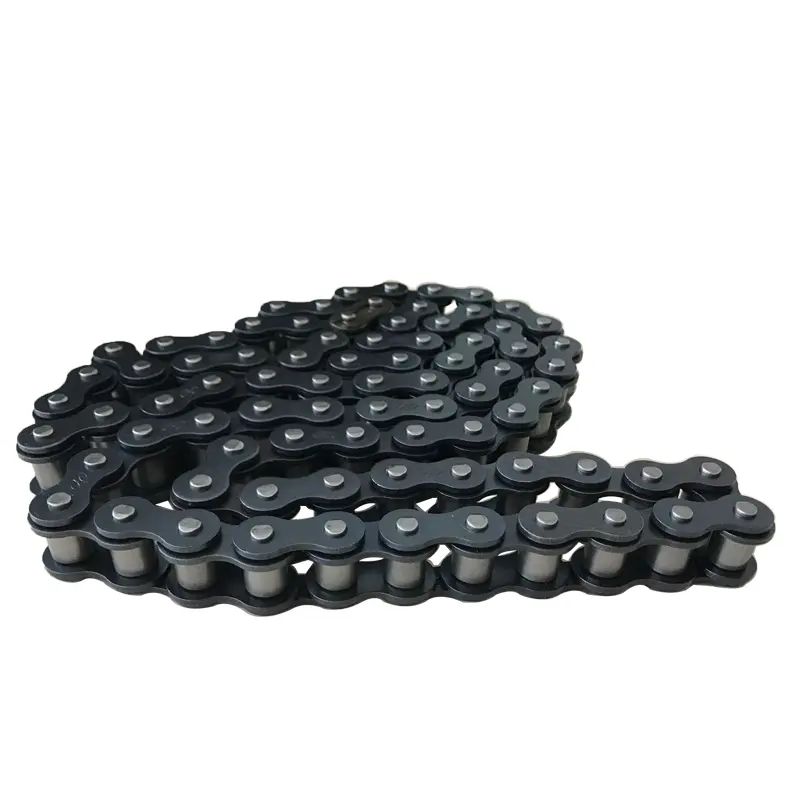
Short Pitch Precision Roller Chains
A. Our Services:
1. Any of your kind inquiry about chain would be replied within 24 hours.
2. Well-trained and experienced sales staffs will reply all your concerns in fluent English.
3. OEM services are available with us, our professional designer would make your private idea into being.
4. Protection of your sales area, ideas of design and all your private information.
5. Delivery by air mail or ship for your orders.
6. With years of manufacture and promotion experience in global market, brings you profit and great success!
B.Product Description:
| Style: | Simplex Roller Chains, Duplex Roller Chains, Triplex Roller Chains, Multiple Roller Chains |
| Chain No.: (ANSI/ISO) | 03C, 04C, 06C, 08A, 10A, 12A-~ 48A |
| Chain No.: ( ANSI ) | 15, 25,35,41,40,50 ~ 240 |
| Pitch: | 4.7625 mm ~ 76.200 mm |
C.Company show & Product Process
D. Packaging & Certificate
| Packaging Details: | Chain+Plastic Bag+Neutral Box+Wooden case+Big Carton+Steel Pallets |
| Delivery Detail: | five weeks |
E. FAQ:
1. Are you manufacturer or trade Company?
We are a factory founded in 1991 with trade team for international service.
2. What terms of payment you usually use?
T/T 30% deposit and 70% against document, Western Union, L/C at sight
3. what is your lead time for your goods?
Normally 45 days after confirmed order. 30 days could be available in low season for some items (during May to July), and 65 days during new year and hot season ( Jan to March).
4. Do you attend any Show?
We attend Hannover show in Germany, NMW in Austrilia, Canton fair, PTC, in China and many other special furniture shows.
5. Do you have any instant chat ?
| Usage: | Conveyor Chain |
|---|---|
| Material: | Alloy/Carbon Steel |
| Surface Treatment: | Electroplating |
| Feature: | Heat Resistant |
| Chain Size: | 1/2"*11/128" |
| Structure: | Roller Chain |
| Customization: |
Available
| Customized Request |
|---|
What are the benefits of using a low-noise transmission chain?
Using a low-noise transmission chain in industrial applications offers several advantages. Here’s a detailed answer to the question:
1. Noise Reduction: One of the primary benefits of using a low-noise transmission chain is the reduction in noise levels. These chains are designed with special features and materials to minimize vibrations, impact, and friction-induced noise during operation. This is particularly important in environments where noise reduction is critical, such as in residential areas, offices, or noise-sensitive industries.
2. Improved Workplace Environment: By reducing noise levels, low-noise transmission chains contribute to a more comfortable and productive workplace environment. Excessive noise can lead to employee fatigue, decreased concentration, and increased stress levels. Using low-noise chains helps create a quieter workspace, promoting better working conditions and overall well-being.
3. Compliance with Noise Regulations: In certain industries or regions, there are specific regulations or guidelines regarding acceptable noise levels. Using low-noise transmission chains can help ensure compliance with these regulations, avoiding potential fines or legal issues related to excessive noise emissions.
4. Enhanced Equipment Performance: Low-noise transmission chains are designed to provide smooth and efficient power transmission while minimizing noise generation. The reduction in vibration and impact noise not only improves the comfort of the workplace but also enhances the overall performance of the equipment. It can contribute to better precision, accuracy, and reliability of the machinery, leading to improved product quality and operational efficiency.
5. Extended Equipment Lifespan: Excessive noise and vibration can accelerate wear and tear on machinery components, leading to increased maintenance and premature failure. By using a low-noise transmission chain, the impact on the equipment’s mechanical parts is reduced, resulting in less wear, lower maintenance costs, and extended equipment lifespan.
6. Customer Satisfaction: In industries where noise can affect the end-user experience, such as automotive, consumer electronics, or precision engineering, using low-noise transmission chains can contribute to higher customer satisfaction. Products that operate quietly are often perceived as higher quality and can lead to a positive brand image and customer loy alty.
It’s important to note that the benefits of low-noise transmission chains may vary depending on the specific application and operating conditions. Manufacturers and equipment designers should consider factors such as load capacity, speed, lubrication, and environmental requirements when selecting and implementing low-noise transmission chains.
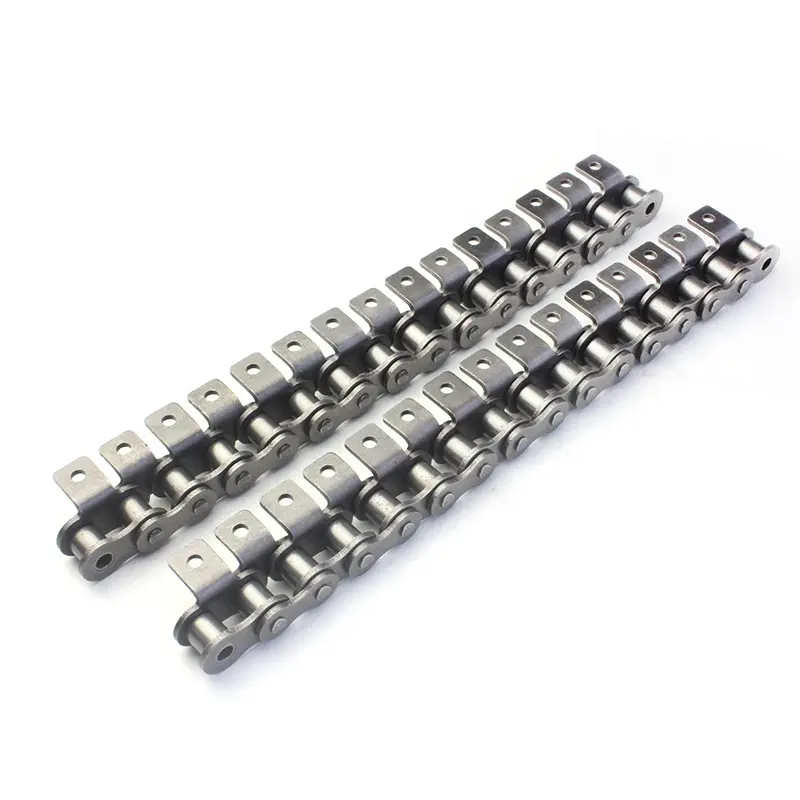
What are the benefits of using a corrosion-resistant coating on a transmission chain?
A corrosion-resistant coating offers several advantages when applied to a transmission chain. Here’s a detailed answer to the question:
1. Enhanced Durability: Corrosion can significantly impact the lifespan and performance of a transmission chain. By applying a corrosion-resistant coating, the chain is protected from the damaging effects of moisture, chemicals, and environmental factors, increasing its durability and longevity.
2. Rust Prevention: Rust formation on a transmission chain can lead to friction, wear, and reduced functionality. A corrosion-resistant coating acts as a barrier, preventing the chain from coming into direct contact with moisture or corrosive substances, thereby inhibiting rust formation and maintaining the chain’s smooth operation.
3. Improved Performance: Corrosion can affect the smooth movement of the chain, causing stiffness, binding, or seizing. With a corrosion-resistant coating, the chain experiences reduced friction and resistance, leading to improved performance, efficient power transmission, and reduced energy consumption.
4. Reduced Maintenance: A transmission chain with a corrosion-resistant coating requires less frequent maintenance and cleaning compared to an uncoated chain. The coating acts as a protective layer, minimizing the accumulation of dirt, debris, and contaminants, thereby reducing the need for frequent cleaning and maintenance.
5. Cost Savings: The use of a corrosion-resistant coating on a transmission chain can result in long-term cost savings. By extending the lifespan of the chain and reducing maintenance requirements, the need for chain replacements and associated downtime and expenses are minimized.
6. Versatility: Corrosion-resistant coatings are available in various formulations suitable for different environments and applications. Whether the transmission chain operates in outdoor conditions, high humidity, chemical exposure, or other corrosive environments, there are coatings specifically designed to provide optimal protection.
7. Environmental Considerations: Using a corrosion-resistant coating on a transmission chain contributes to environmental sustainability. By extending the life of the chain, fewer resources are consumed in manufacturing replacements, reducing waste generation and promoting a more eco-friendly approach.
It’s important to note that the selection of the appropriate corrosion-resistant coating depends on the specific operating conditions, such as temperature, chemical exposure, and the type of corrosive agents encountered. Consulting with coating manufacturers or experts can help determine the most suitable coating solution for a transmission chain based on the application requirements.

What are the key components of a transmission chain?
A transmission chain consists of several key components that work together to transmit power and motion efficiently. The main components of a transmission chain include:
- Inner Plates: These are flat metal plates with holes or slots for connecting the other components of the chain.
- Outer Plates: Similar to inner plates, outer plates provide additional strength and support to the chain.
- Pins: The pins hold the inner and outer plates together, creating a flexible link between them. They play a crucial role in maintaining the integrity and functionality of the chain.
- Bushings: Bushings are cylindrical components that fit into the holes of the inner and outer plates. They provide a smooth surface for the chain to rotate around the pins.
- Rollers: Rollers are cylindrical elements that fit between the inner plates and the bushings. They reduce friction and enable smooth movement as the chain engages with the sprockets.
- Solid Bushings (optional): In some transmission chains, solid bushings may be used instead of bushings with holes. Solid bushings provide additional strength and stability to the chain.
- Sprockets: Sprockets are toothed wheels that engage with the rollers of the transmission chain. They transfer power and motion to the chain, enabling it to drive various machinery and equipment.
These components work together to form a continuous loop that transmits power from the driving sprocket to the driven sprocket, allowing the chain to transfer rotational motion and drive various mechanical systems.


editor by CX 2023-11-13